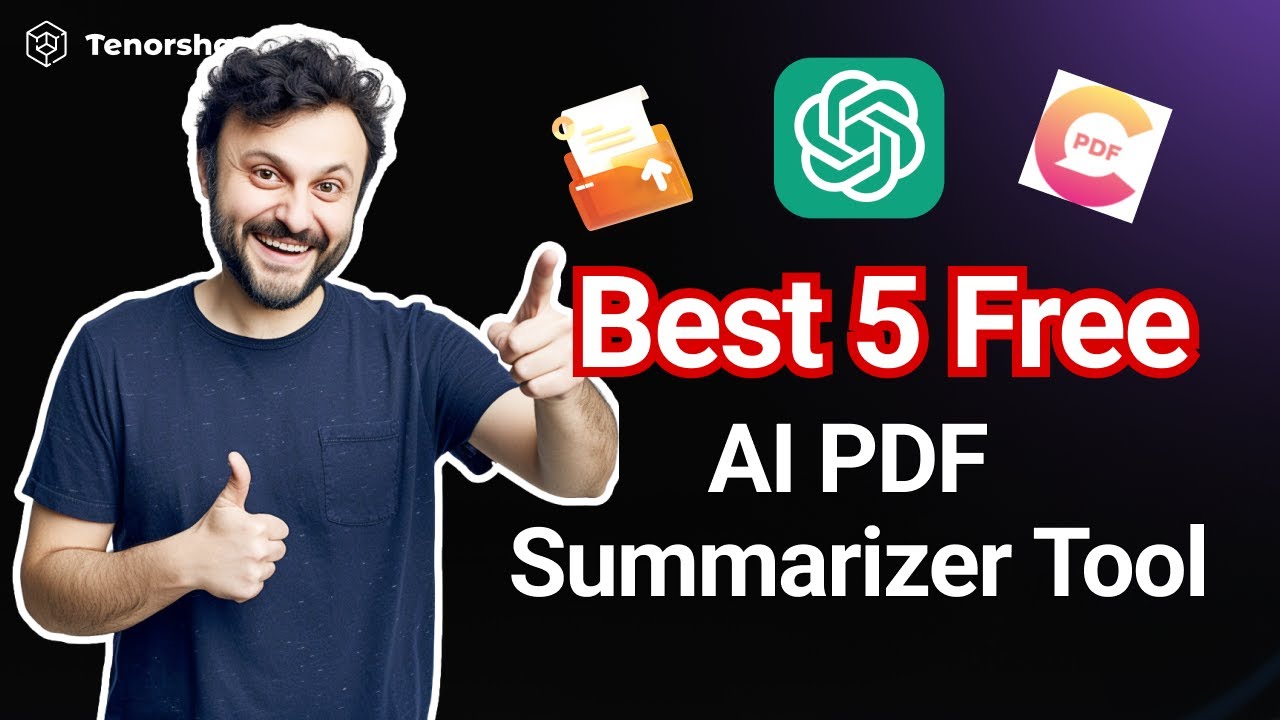
In 2026, AI-powered PDF summarizers have become essential tools for students, researchers, professionals, and anyone dealing with lengthy documents like research papers, reports, contracts, or books. These online tools use advanced large language models to generate concise summaries, extract key insights, support chatting with documents (asking questions about the content), and often handle scanned PDFs via OCR.
Many offer generous free tiers for casual use, while paid plans unlock higher limits, better models, larger file support, and advanced features like multi-document analysis or custom prompts.
Here are some of the top AI PDF summarizer tools available online, blending free and paid options based on recent reviews, user feedback, and feature sets as of early 2026.
1. NoteGPT
NoteGPT stands out as a versatile, student-friendly option with strong free access.
- Key Features: Upload PDFs for instant summaries, chat with documents, generate mind maps/flashcards for study, translation support, and handles educational materials well.
- Free Tier: Generous free usage; no signup required for basic summarization.
- Paid: Upgrades for higher limits and advanced features.
- Best For: Students, visual learners, and quick study aids.
- Website: notegpt.io/pdf-summary
2. ChatPDF
One of the pioneers in conversational PDF interaction, still highly popular.
- Key Features: Upload a PDF and chat naturally (e.g., “What are the main arguments?”), quick summaries, supports multiple questions per document.
- Free Tier: Limited daily uploads/queries (e.g., 2 per day in some plans).
- Paid: Starts around $10–20/month for unlimited or higher quotas.
- Best For: Anyone wanting to “talk” to their PDF like a study buddy.
- Website: chatpdf.com (or similar dedicated platforms)
3. Smallpdf AI Summarizer
A clean, user-friendly tool from a trusted PDF editing brand.
- Key Features: Fast summaries, supports scanned PDFs (OCR), simple interface integrated with other PDF tools like compression/editing.
- Free Tier: Limited summaries per day/month.
- Paid: Pro plans (~$12–15/month) for unlimited and extras.
- Best For: General users needing quick, reliable summaries alongside basic PDF editing.
- Website: smallpdf.com/pdf-summarizer
4. SciSpace (formerly Typeset)
Tailored for academic and research-heavy PDFs.
- Key Features: Deep literature summaries, explains complex sections, extracts tables/figures, literature review tools, and chat for clarification.
- Free Tier: Solid free access for basic use.
- Paid: Premium for unlimited processing and advanced Copilot features.
- Best For: Researchers, students writing papers, and scientific/technical documents.
- Website: scispace.com
5. Adobe Acrobat AI Assistant
The enterprise-grade choice if you’re already in the Adobe ecosystem.
- Key Features: Integrated AI summaries in Acrobat, handles large/complex docs, generative summaries, editing integration, strong OCR for scans.
- Free Tier: Limited in free Acrobat Reader; full AI needs subscription.
- Paid: Acrobat Pro (~$20+/month) unlocks full AI capabilities.
- Best For: Professionals, legal/business users needing polished, secure processing.
- Website: adobe.com/acrobat (AI features)
6. Claude AI (Anthropic)
Direct upload to Claude for excellent large-context summarization.
- Key Features: Handles very long PDFs with high contextual accuracy, great for technical/policy docs, custom prompts for tailored summaries.
- Free Tier: Rate-limited but usable.
- Paid: Pro plan for higher limits and priority access.
- Best For: In-depth, accurate summaries of complex or lengthy files.
- Website: claude.ai
7. ChatGPT (OpenAI)
The go-to general-purpose tool with strong PDF support.
- Key Features: Upload PDFs (GPT-4o or newer models), ask for summaries of any length/style, multi-document comparison, abstractive summaries.
- Free Tier: Basic access with limits.
- Paid: Plus/Pro (~$20+/month) for advanced models and higher file limits.
- Best For: Versatile everyday use and custom summary needs.
- Website: chat.openai.com
8. PDFGPT / Other Chat-with-PDF Platforms
Tools like PDFGPT emphasize conversational analysis beyond basic summaries.
- Key Features: Natural language queries on uploaded PDFs, multi-file support in some.
- Free Tier: Varies; often limited.
- Paid: Subscription for full access.
- Best For: Interactive document exploration.
- Website: pdfgpt.io (example)
Quick Comparison Table
| Tool | Free Tier Quality | Chat with PDF | Scanned/OCR Support | Best Use Case | Approx. Paid Starting Price |
|---|---|---|---|---|---|
| NoteGPT | High | Yes | Yes | Students/Study | Low–Medium |
| ChatPDF | Medium | Yes | Varies | Conversational Q&A | $10–20/mo |
| Smallpdf | Medium | Yes | Strong | General/Editing combo | $12–15/mo |
| SciSpace | High | Yes | Yes | Academic/Research | Varies |
| Adobe Acrobat | Limited | Yes | Excellent | Professional/Enterprise | $20+/mo |
| Claude AI | Rate-limited | Yes | Via upload | Technical/Long docs | Pro tier |
| ChatGPT | Good | Yes | Via upload | All-purpose | $20+/mo |
Final Thoughts
For most users in 2026, start with free options like NoteGPT or ChatPDF for quick wins without hassle. If your workflow involves heavy academic reading, SciSpace excels. For professional reliability, Adobe Acrobat AI or Claude deliver top-tier accuracy.
These tools evolve rapidly—check their sites for the latest limits and model updates. Which one fits your needs best depends on file size, privacy requirements, and whether you want simple TL;DR summaries or interactive exploration!